
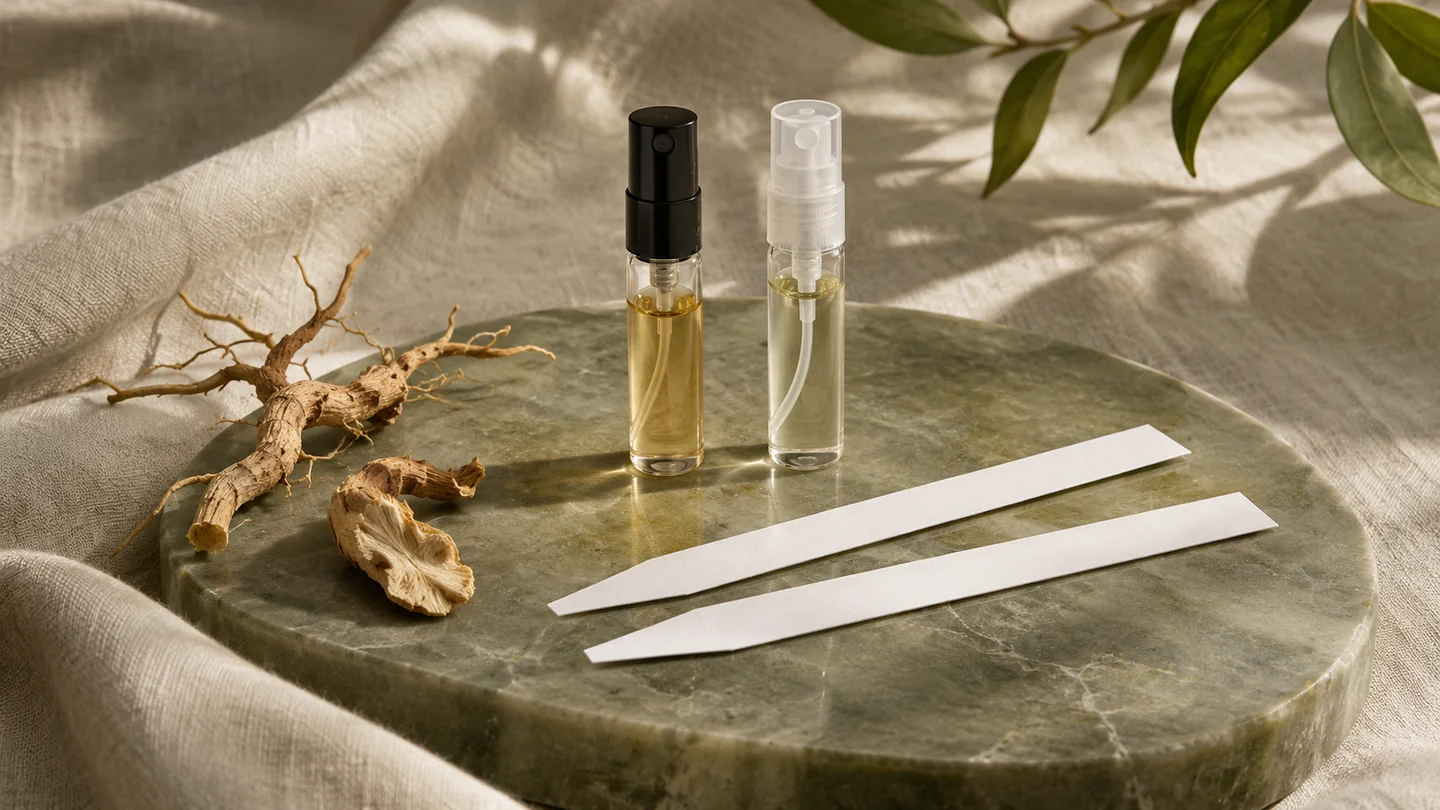
Compare vetiver perfumes using two official descriptions and a simple sample routine.
To compare vetiver perfumes, start with what each fragrance puts beside the vetiver. One brand might describe it alongside green bergamot and pepper. Another might give you grapefruit, orange flower and nutmeg. Those details can help you choose two samples with a clear question in mind.
This guide uses two original designer fragrances as examples of how brands describe vetiver. Fragrentis Editorial Team publishes the guide. Fragrentis sells independent inspired fragrances in a separate catalog.
Compare vetiver perfumes with one clear question
Start by naming what interests you in the descriptions. Suppose you enjoy a dry woody scent and want to know which opening you would reach for more often. Put a citrus-and-spice option on one side of the shortlist. Put an option with citrus, spice and a floral cue on the other. You can then ask which surrounding detail makes the woody impression more appealing to you.
“Dry” is a description of how a scent strikes you. Give it a practical meaning in your notes. You might use it for a woody impression that feels less sweet than the scent you normally wear. A friend might use it to describe something that reminds them of pale wood. A short reference to what you already know makes the word more useful the next time you shop.
When you compare vetiver perfumes, choose one reason for the comparison. If you care about enjoying the scent during a short morning routine, pay attention to the opening. If you care about what you still enjoy once you settle into the day, give that later impression its own entry. You can make a good decision without comparing every possible feature.
Compare vetiver perfumes using two official descriptions
Hermès’s Terre d’Hermès collection page describes Eau Intense Vétiver through vetiver, green bergamot and Sichuan pepper. Take those details as a prompt to look for a bright, peppery edge around the woods. The collection page also covers other Terre d’Hermès releases, so copy the full variant name when you make your shortlist.
Tom Ford Beauty’s Grey Vetiver Eau de Parfum page highlights grapefruit and orange flower alongside spices including nutmeg, with vetiver and oakmoss also named. Here, a shopper could ask whether the floral or citrus impression matters more to their interest in the fragrance. The Eau de Parfum designation identifies the specific official page used in this guide.
Both examples contain citrus and spice in their descriptions. That makes a simple “citrus versus spice” test too broad. A more useful comparison is to notice which named detail you recognize, how the woods feel beside it, and which version you would want to revisit. It is fine if the detail you enjoy most has no easy name.
The brand pages describe the original fragrances. They do not provide equivalent formulas, comparable wear measurements or details about the products in the Fragrentis catalog.
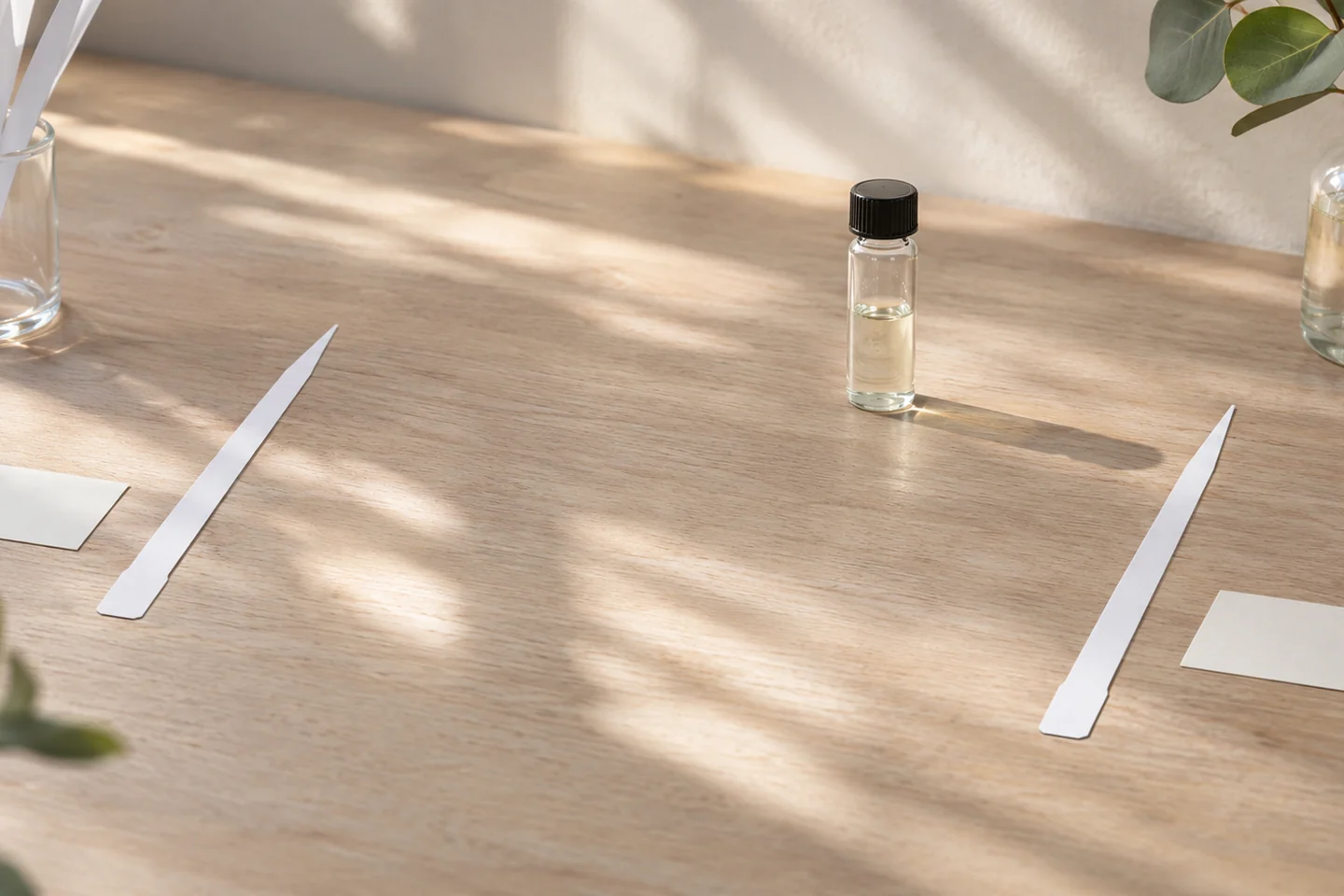
Use two strips to narrow the shortlist
Label each strip with the full product name before spraying. Use separate strips and follow the sample directions. Keep the strips apart so you can return to each one. Set aside other scented products during the comparison if you want a simpler starting point.
Write one sentence about each opening. A useful entry might be “the opening feels sharp to me, and I want to see what happens when it settles.” If you have time, return to both strips later and record whether you still want to smell each one again. Keep the elapsed time as context for your own note. It does not need to become a performance score.
If the descriptions guided you toward an impression you cannot find, record that too. You might prefer a strip while being unsure what creates the effect. That uncertainty is compatible with a purchase decision. Leave the ingredient question to the maker and keep your preference in your own words.
Compare vetiver perfumes during a normal day
Once one sample has earned more attention, try it in a familiar routine according to the product directions. Give it a day where you can decide whether the scent suits the things you actually do. A few quiet hours at home can be a useful starting point. Follow any fragrance guidance for shared spaces.
Decide what would make the trial worthwhile before starting it. Perhaps you want to enjoy the opening when you get dressed, or you want to check whether the later woody impression feels right while you read or work. Pick one of those questions and return to it. There is no need to ask somebody else to score the perfume or estimate its reach.

If the first sample fits, leave the second available for another day. If the first leaves you unsure, try the other sample in a similar routine. Then use your short notes to decide whether you would use either one often enough to buy more. A preference for the peppery opening, the floral accent or the later woody feel gives you a clear reason to choose.
Take the preference into the shop
Write the sentence you would want a seller to read. “I want dry woods with a bright opening that still feels comfortable later” gives a better starting point than a single note name. If you are exploring an inspired fragrance, read its own listing and decide whether the description fits that sentence.
Browse independent inspired fragrances from Fragrentis. Compare the published product descriptions and check the current format on the listing before ordering.
Sources and editorial notes
The official Hermès US collection and Tom Ford Beauty US product page support the two descriptions above. The comparison routine is an editorial suggestion. It describes no brand test, community rating or personal wear result.
Reviewed November 12, 2026 by Fragrentis Editorial Team.